Soft Summer Hair Color —Every Shade, Explained
Soft Summer Hair Color: The Complete Shade Guide
Best Hair Colors for Soft Summer
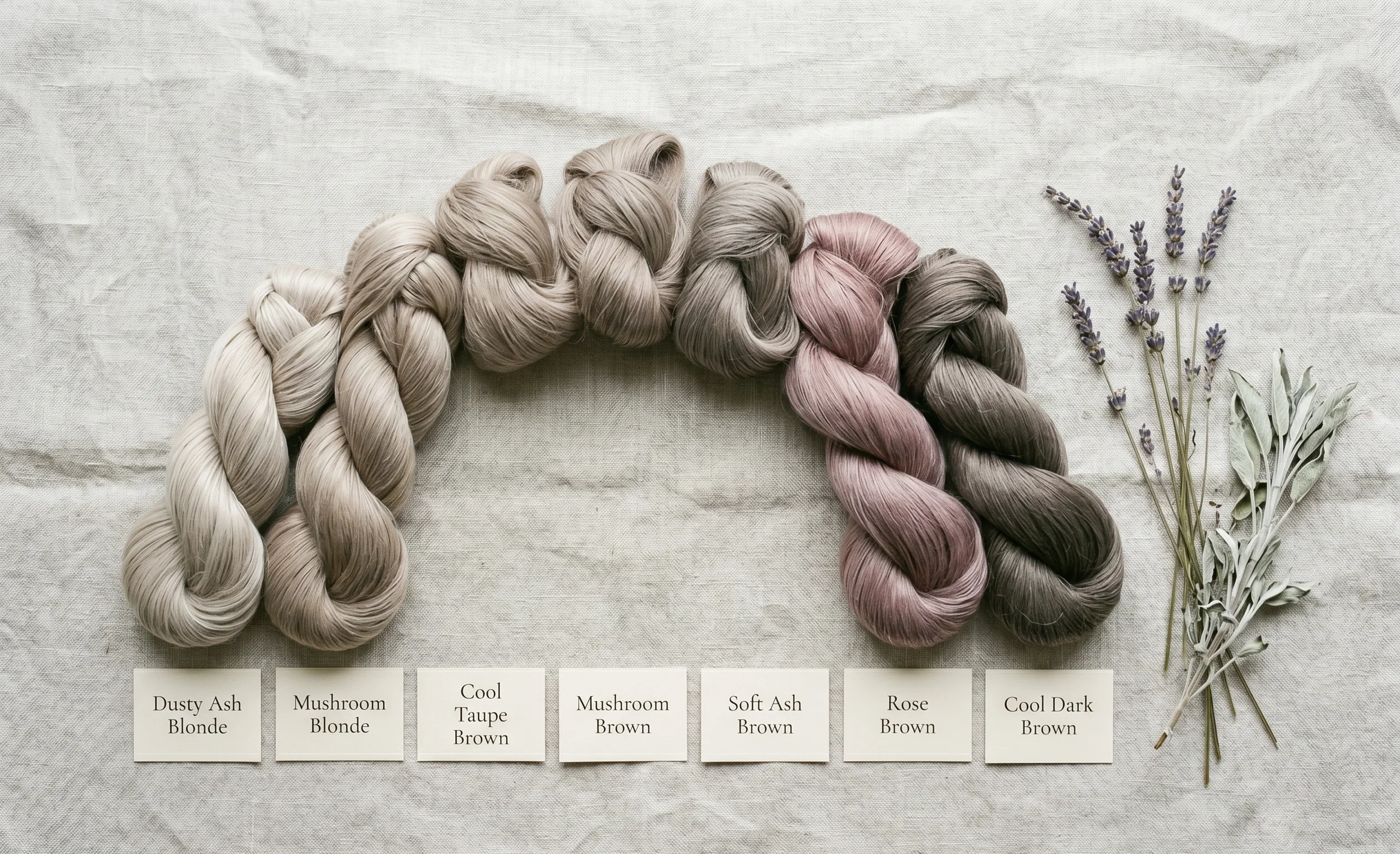
Soft Summer hair color must be cool-toned and muted. The signature shades: mushroom brown (level 6–7), soft ash brown, dusty ash blonde, cool taupe brown, and rose brown. All share two non-negotiable qualities — no golden or red warmth, and no high-saturation vibrancy. The one phrase that defines every correct Soft Summer hair color: “ash-toned and slightly greyed.” Any shade described as golden, warm, rich, or vibrant sits outside the Soft Summer hair colour territory.
Table of Contents
The One Rule Behind All Soft Summer Hair Colors
Soft Summer colouring has a specific signature: it reads cool, muted, and medium in depth. The hair is always part of this picture. It contributes to the low-to-medium contrast that defines the season — it should never dramatically diverge from the skin depth, and it should never introduce warmth the face cannot absorb.
Every correct Soft Summer hair color does the same thing: it echoes the naturally ashy, cool-grey pigmentation already present in the season’s colouring. It does not fight it. It does not try to add warmth or brightness the face does not have. It simply goes deeper or lighter in the direction that was already there.
The Defining Words for Soft Summer Hair
Wear: Ash. Mushroom. Dusty. Greige. Muted. Cool. Taupe. Rose (cool-toned). Soft.
Avoid: Golden. Warm. Honey. Caramel. Copper. Auburn. Rich. Vibrant. Bright. Glossy-warm.
If a shade description contains any word from the “avoid” list, it is almost certainly outside the Soft Summer hair colour territory — regardless of how muted it looks in the photo or how appealing it sounds in person.
The Nature Analogy — What Soft Summer Hair Looks Like
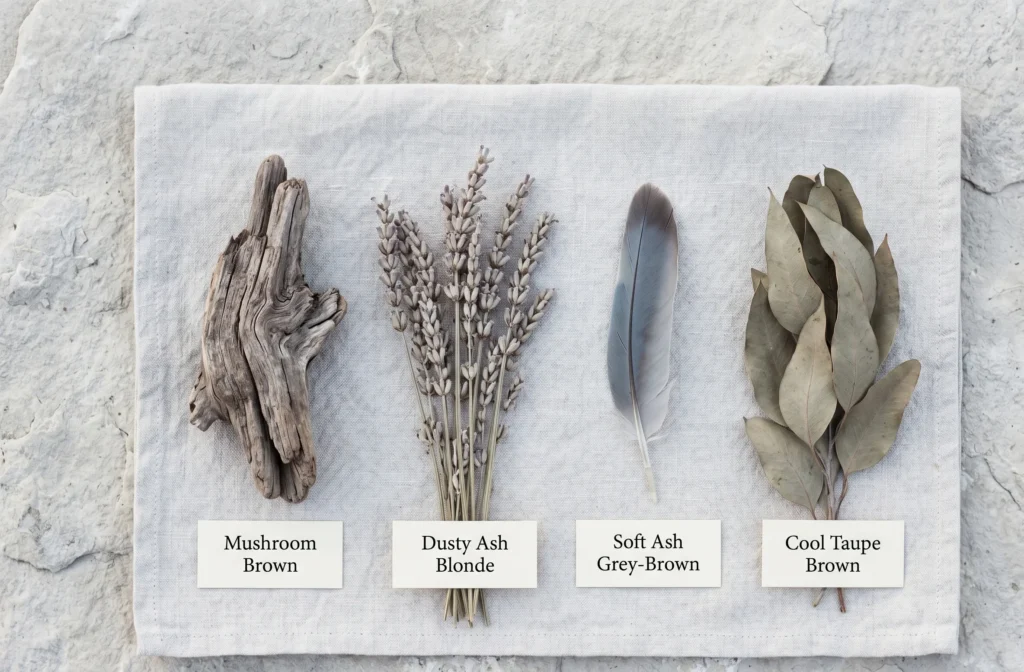
Picture a herring gull’s wing feathers — that specific cool grey with a slightly ashy quality that reads as neither brown nor grey but precisely the overlap between them. Or the soft grey-brown of driftwood on a cool overcast beach. Or dried lavender stalks after six months — that desaturated, slightly dusty, still-cool tone. None of these have golden warmth. All of them have a characteristic cool-grey quality. That is the Soft Summer hair texture.
The Soft Summer Hair Color Palette
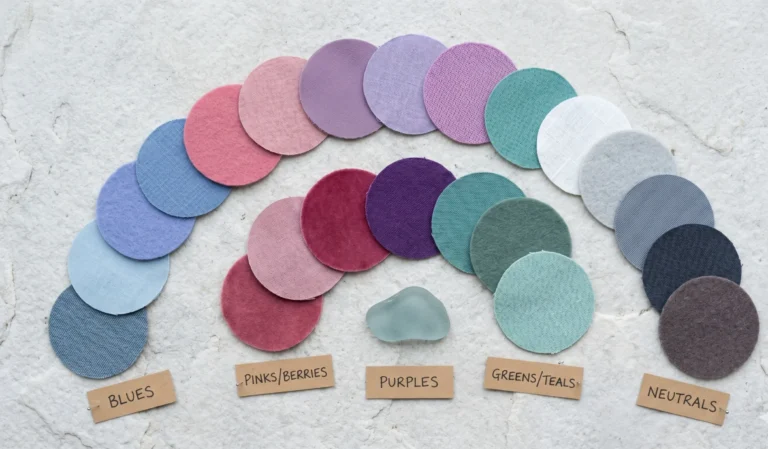
The complete soft summer hair colour palette spans from dusty light blonde to cool medium-dark brown, with a rose-mauve family on the side. Every shade sits within a cool thermal direction and a muted saturation level. Here is the full palette at a glance:
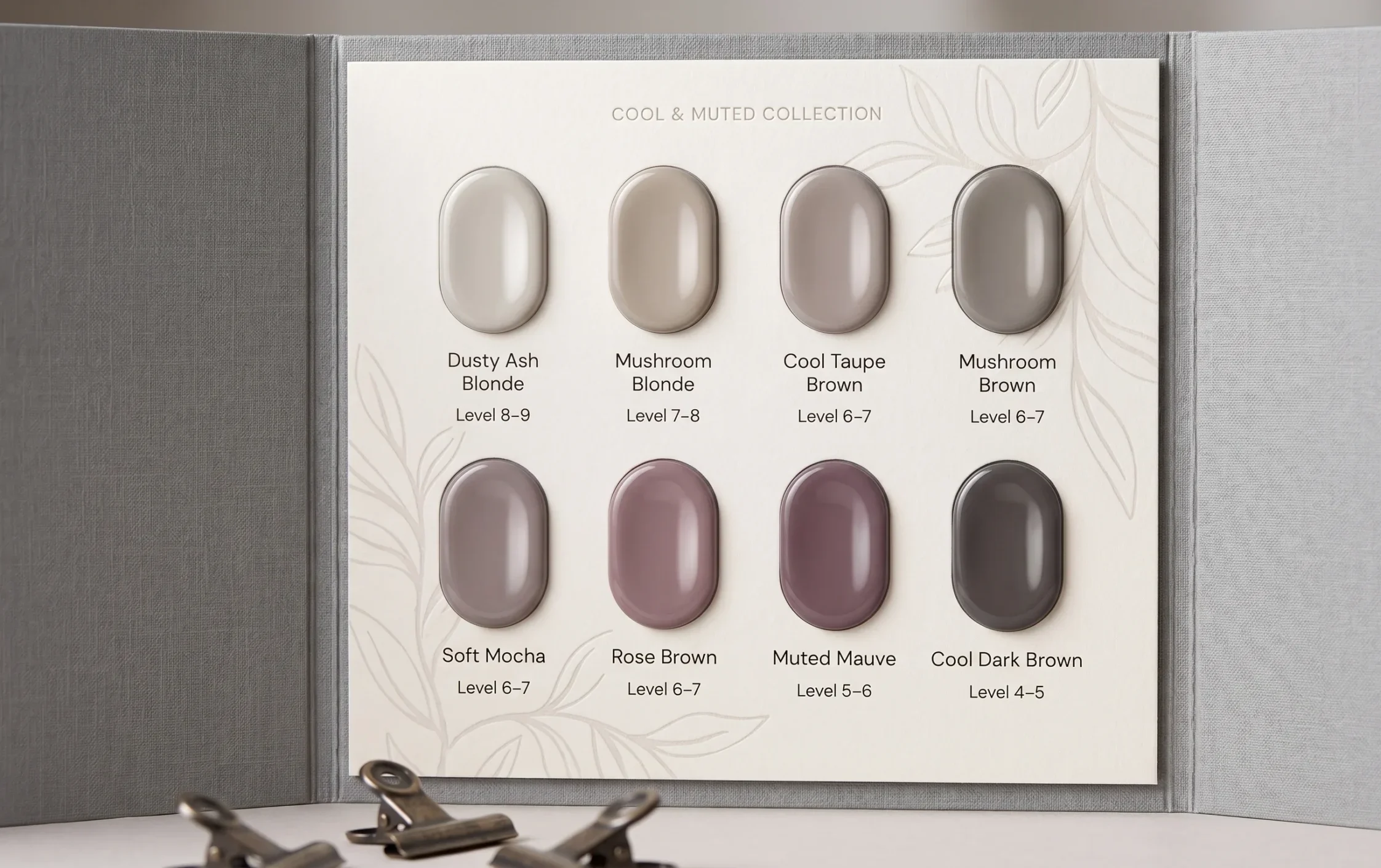
What makes every shade above a Soft Summer hair colour is not just the hue — it is the absence of golden warmth. Each one has been modified with grey, ash, or a cool-based pigment that neutralises any yellow or orange tendency. In a warm light source, these shades may look slightly warmer than they are. Always evaluate under natural daylight.
Best Brown Shades for Soft Summer
Brown is where Soft Summers is most naturally at home. The season’s characteristic hair pigmentation — heavily grey-toned, ashy, low in warmth — sits squarely in the cool brown spectrum. The right Soft Summer brown looks as if the grey-cool quality of the season simply extended into the hair.
Mushroom Brown — The Signature Shade
Mushroom Brown
Level 6–7 · The Soft Summer Signature
A cool-toned, greyed brown with subtle taupe or mauve undertones. Reads as neither warm brown nor true grey — it sits in the precise overlap. The hair equivalent of the Soft Summer colour palette’s misty blue-grey. In natural daylight it shows a slightly ashy, slightly cool quality that has no warmth whatsoever.
“Level 6–7 ash brown, cool-toned, no warmth, no red. Greige or mushroom tone.”
Soft Ash Brown
Soft Ash Brown
Level 5–6 · For medium-depth natural colour
A medium-depth cool brown with a clearly ashy, slightly blue-grey quality. Deeper than mushroom brown but still firmly cool-toned. Works well for natural darker hair that needs to stay within the Soft Summer thermal zone.
“Level 5–6 cool ash brown. No warmth. Blue-ash tone. Think of mousy brown, not chestnut.”
Cool Taupe Brown
Cool Taupe Brown
Level 6–7 · The “Your Hair But Better” Version
A slightly lighter brown with a greige-taupe quality — sitting at the exact neutral-cool midpoint. More blonde-adjacent than mushroom brown but still clearly brown. Often described by clients as “exactly what I wanted my natural colour to look like.”
“Level 6–7 cool-neutral taupe brown. Greige tone, no warmth or golden elements.”
Dark Cool Brown — The Deep Option
Dark Cool Brown
Level 4–5 · With subtlety only
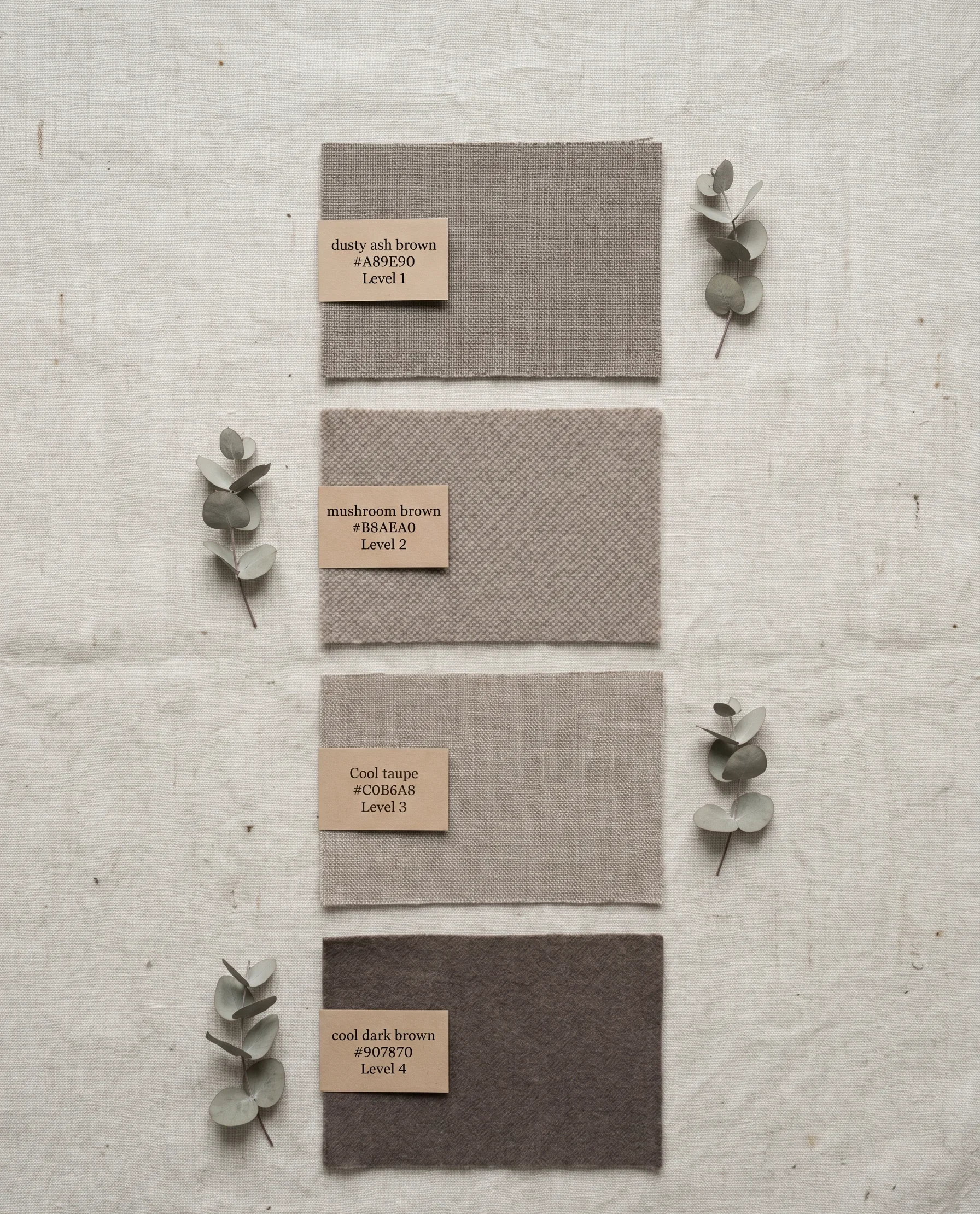
Soft Summer can wear darker brown — but this is the outer limit of the depth range. At level 4–5, the key is cool undertone and subtle dimension. Avoid flat, single-process jet-dark applications. The dark cool brown should feel like a rich mushroom, not a warm espresso. Subtle cool highlights prevent it from reading too heavy on low-contrast Soft Summer colouring.
“Level 4 cool chocolate brown. No red or warm base. Cool, muted, with a few level 6 ash highlights for dimension.”
Note on “Mousy Brown”: This term — often used to describe Soft Summer’s natural hair colour — actually describes the ideal Soft Summer hair colour precisely. Mousy brown, in colour analysis terms, means cool-toned, ashy, medium depth — not a flaw to correct but the biological description of where this season lives. The hair dye equivalent is mushroom brown or cool taupe brown. Do not attempt to “lift” out of mousy brown toward golden — this directly conflicts with the Soft Summer palette.
Best Blonde Shades for Soft Summer
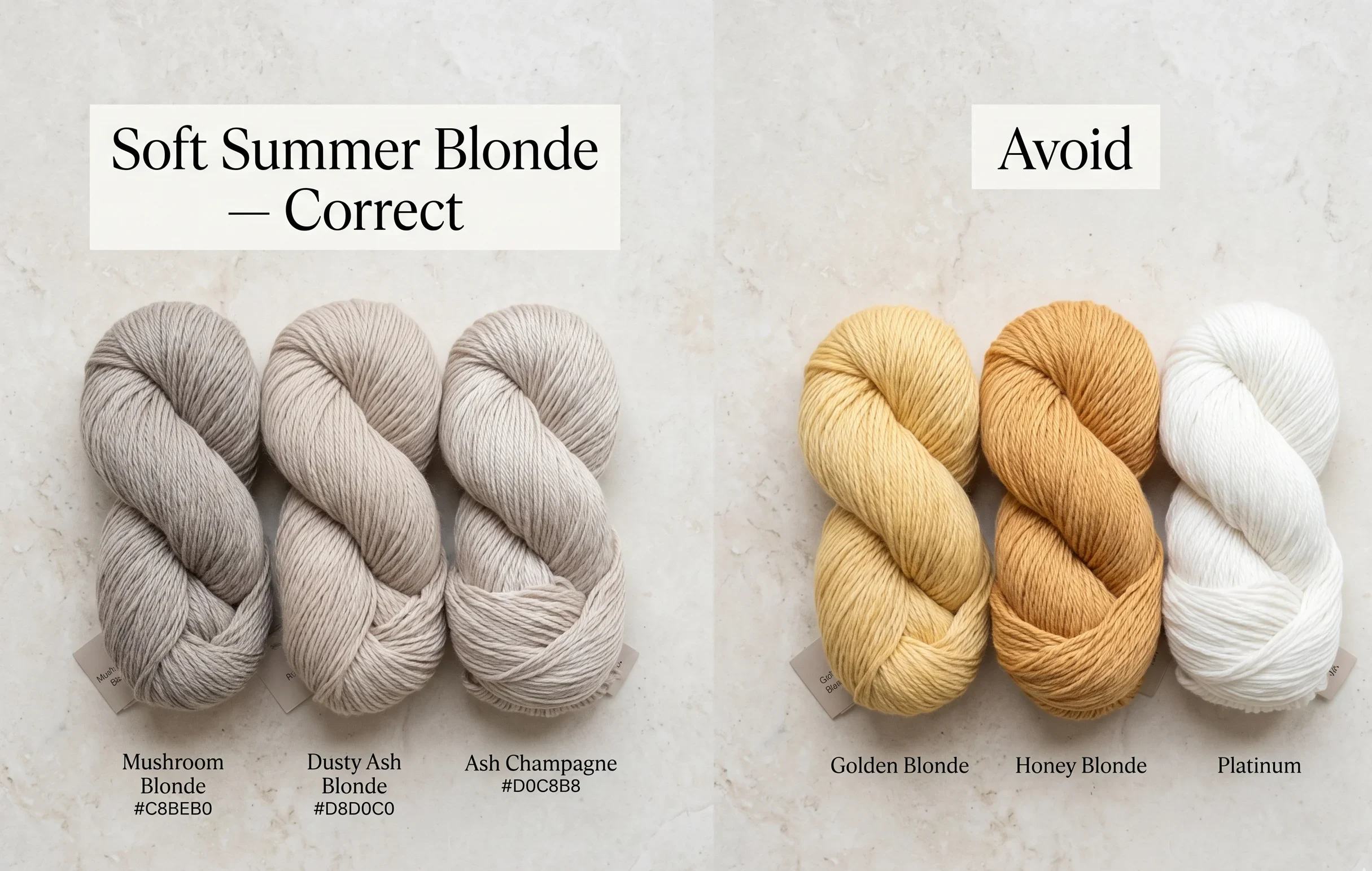
Soft Summer can absolutely go blonde — with one non-negotiable condition. The blonde must be muted, cool, and slightly greyed. Not bright, not golden, not platinum. The Soft Summer blonde zone sits between a clearly ashy cool and a greige — blonde without any of the warmth, vibrancy, or contrast that would pull the colouring out of its natural thermal range.
Mushroom Blonde — The Gold Standard
Mushroom Blonde
Level 7–8 · The Best Overall Soft Summer Blonde
A greige-toned blonde — the precise midpoint between grey and blonde where neither dominates. It reads as blonde but you cannot call it golden or bright. Its muted, slightly dusty quality is exactly what makes it the most universally flattering soft summer hair colour in the blonde family. It maintains low contrast against the skin and reads as naturally sophisticated.
“Level 7–8 mushroom blonde. Ash or greige base, no yellow undertone. Muted and dusty, not bright.”
Dusty Ash Blonde
Dusty Ash Blonde
Level 8–9 · For lighter natural colour
A muted, cool blonde with greige undertones — lighter than mushroom blonde, cooler than champagne. The “dusty” descriptor is important: it means the colour has had its brightness reduced, leaving a cool, slightly atmospheric quality similar to dried grasses in winter.
“Level 8 or 9 ash blonde. Dusty and muted. No golden or yellow undertone. Cooler than champagne but warmer than platinum.”
Ash Champagne
Ash Champagne
Level 8–9 · The Soft Summer Formal Blonde
A cool champagne blonde where the champagne quality reads as a cool iridescence rather than a warm gold. At first glance it may seem similar to golden champagne — the distinction is entirely in the undertone. Ash champagne has a blue-cool base. Golden champagne has a yellow-warm base. The former suits Soft Summer; the latter does not.
“Ash champagne blonde, level 8–9. Cool undertone, NOT golden champagne. Iridescent but cool, not warm.”
What About Platinum for Soft Summer?
Platinum blonde (level 10–11) sits outside the Soft Summer range for two reasons. First, it introduces high contrast against the skin — significantly exceeding the season’s medium-contrast ceiling. Second, even a “cool” platinum has significant brightness (high chroma from white-lightening) that the Soft Summer palette does not accommodate.
The boundary for Soft Summer blonde sits at level 9 maximum. Beyond level 9, the contrast ratio and brightness begin to exceed what Soft Summer colouring can absorb without looking washed out or creating an obvious mismatch between hair and face.
Rose, Mauve & Cool-Red Shades for Soft Summer
This is the most distinctive and least commonly discussed zone of the Soft Summer hair colour palette — and it is entirely legitimate. Soft Summer can wear rose, mauve, and dusty-cool red tones in the hair, provided the temperature and saturation are correctly calibrated.
The rule for Soft Summer reds and roses: the warmth must be neutralised by grey or blue-cool pigment. A Soft Summer “red” does not look red. It looks like a muted plum-rose or dusty cool berry — closer to dried rose petals than fresh red flowers.
Rose Brown
Level 6–7 · The Signature Rose Shade
A cool brown with a subtle rose or mauve quality — the most wearable and natural-looking of the rose family. Rose brown does not read as pink in ambient light. It reads as an unusual, slightly rosy cool brown. When someone says “what’s different about your hair?” — that is rose brown working correctly.
“Level 6–7 cool brown with rose or mauve undertones. No warmth or copper. Think rose-grey, not rose-gold.”
Soft Mauve
Level 6 · More Intentional, Still Wearable
A cool-toned, muted purple-brown. More obviously non-natural than rose brown, but still within the Soft Summer palette’s muted-cool range. Works best for those whose natural colouring already has a visible lavender-grey quality in the hair — which many deep Soft Summers do.
“Muted cool mauve, level 6. Purple-brown with no warmth. Soft and dusty, not vivid or bright.”
What Soft Summer should never do in the red family: copper, auburn, warm red, bright red, ginger, or strawberry blonde. These all carry significant warm-yellow or orange undertone — the thermal opposite of what Soft Summer colouring requires. Even if muted, a copper-based tone will read as sallow and discordant against the cool biology of the face.
Soft Summer Highlights & Balayage
Highlights are where many Soft Summer clients run into difficulty — because the most popular highlight techniques (balayage, face-framing pieces, money piece) are often executed in warm-golden tones that sit entirely outside the Soft Summer palette.
The principle for Soft Summer highlights: low contrast, cool tone, muted brightness. The highlight should feel like a natural shift in depth rather than a deliberate colour addition. If the highlight reads as distinctly separate from the base in warmth or brightness — it is too much.
Best Highlight Techniques for Soft Summer
Technique
How It Works for Soft Summer
Tone to Request
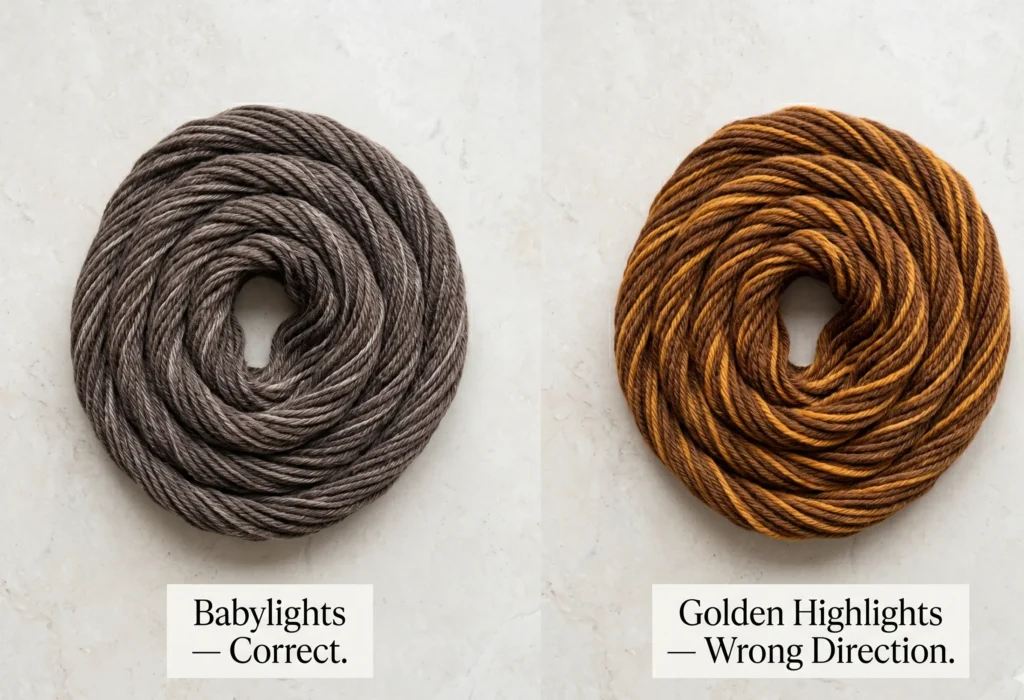
Very fine, delicate highlights scattered throughout. The most Soft Summer-compatible technique — creates subtle dimension without visible contrast stripes. The highlights should be 1–2 levels lighter than the base, in ash or greige.
Ash champagne or mushroom blonde, 1–2 levels above base
Shadow Root Balayage
A cool-toned root is kept slightly deeper than the lengths — creating dimension that goes from slightly deeper to slightly lighter while staying in the same cool-grey zone. Low maintenance and very Soft Summer-appropriate.
Cool ash base with dusty blonde or mushroom ends. No golden at any point.
Glossing / Toning
Not a highlight, but a toning gloss applied over existing hair to neutralise warmth and refresh the cool quality. Essential maintenance for Soft Summer after any highlights. Can shift the entire colour toward a cooler, more muted tone without lightening.
Ash-based gloss, violet-based toner, or cool pearl toner depending on existing depth
Face-Framing (Subtle)
Soft, subtle highlights around the face only — no more than 1–2 levels lighter, in ash or mushroom tone. The face-framing should not create high contrast against the base. Think of it as brightening, not highlighting.
Mushroom blonde or dusty ash, 1 level above base only
Balayage for Soft Summer — The Right Approach
Balayage is better than traditional foil highlights for Soft Summer because its natural blending creates less visible contrast. But the shade selection still matters completely.
✓ Balayage That Works
Ash champagne on mushroom brown base
Dusty blonde on cool taupe base
Greige on ash brown base
Mushroom blonde on cool dark brown
Rose blonde highlights on rose brown base
Maximum 2 levels of lift from base colour
✗ Balayage to Avoid
Golden or honey tones on any base
Caramel balayage of any kind
Platinum on dark base (too high contrast)
Copper or warm-red tones
Chunky, high-contrast placement
More than 2 levels of lift in one session
Hair Colors Soft Summer Must Avoid
Understanding what to avoid is as important as knowing what works — because the wrong hair colour is the most visible and most persistent error in personal colour presentation. Hair colour frames the face in every interaction, in every photo, in every light condition. Getting it wrong is not subtle.
Golden Blonde
Honey
Copper
Warm Auburn
Warm Chestnut
Jet Black
Platinum
All of the above sit outside the Soft Summer hair colour palette — avoid in any application, including highlights and lowlights.
Shade to Avoid
Why It Conflicts
What Happens
Golden Blonde
Warm yellow undertone directly opposes the cool biology of the skin and eyes
Skin reads as sallow or slightly yellow-toned; the hair appears to come from a different person
Honey / Caramel
Rich warm tones exceed Soft Summer’s thermal tolerance at every depth
Creates a warmth mismatch that makes the cool-toned skin look tired by comparison
Copper / Auburn
Warm red-orange pigmentation is the opposite thermal direction from Soft Summer
Immediately visible thermal conflict — skin and hair fight rather than harmonise
Warm Chestnut
Red-warm undertones create a contrast with the cool undertone of the skin
Looks like a dye rather than a natural hair colour — the warmth reads as imposed, not belonging
Jet Black
Creates a contrast ratio far exceeding Soft Summer’s medium-contrast ceiling
The face looks smaller and paler by comparison; the hair dominates at the expense of the features
Platinum Blonde
Brightness and contrast both exceed the Soft Summer range — too vivid, too high-contrast
The hair creates a stark frame around the face that the muted colouring cannot match — looks washed out
Strawberry / Warm Red
Orange-warm undertone in the red family — directly conflicts with cool undertone
Skin reads as slightly greenish or flat by contrast with the warm-red hair — the opposite of harmony
Going Grey Naturally — The Soft Summer Advantage
Here is something no competitor guide acknowledges clearly: Soft Summer is one of the most naturally flattering colour seasons for going grey. This is not a consolation. It is a genuine biological advantage that deserves recognition.
Grey hair is cool, muted, and medium in depth — precisely the three qualities that define the Soft Summer colour palette. When a Soft Summer client stops colouring, the incoming grey hair does not fight with the season’s colouring. It resonates with it. Grey is, technically, a Soft Summer colour.
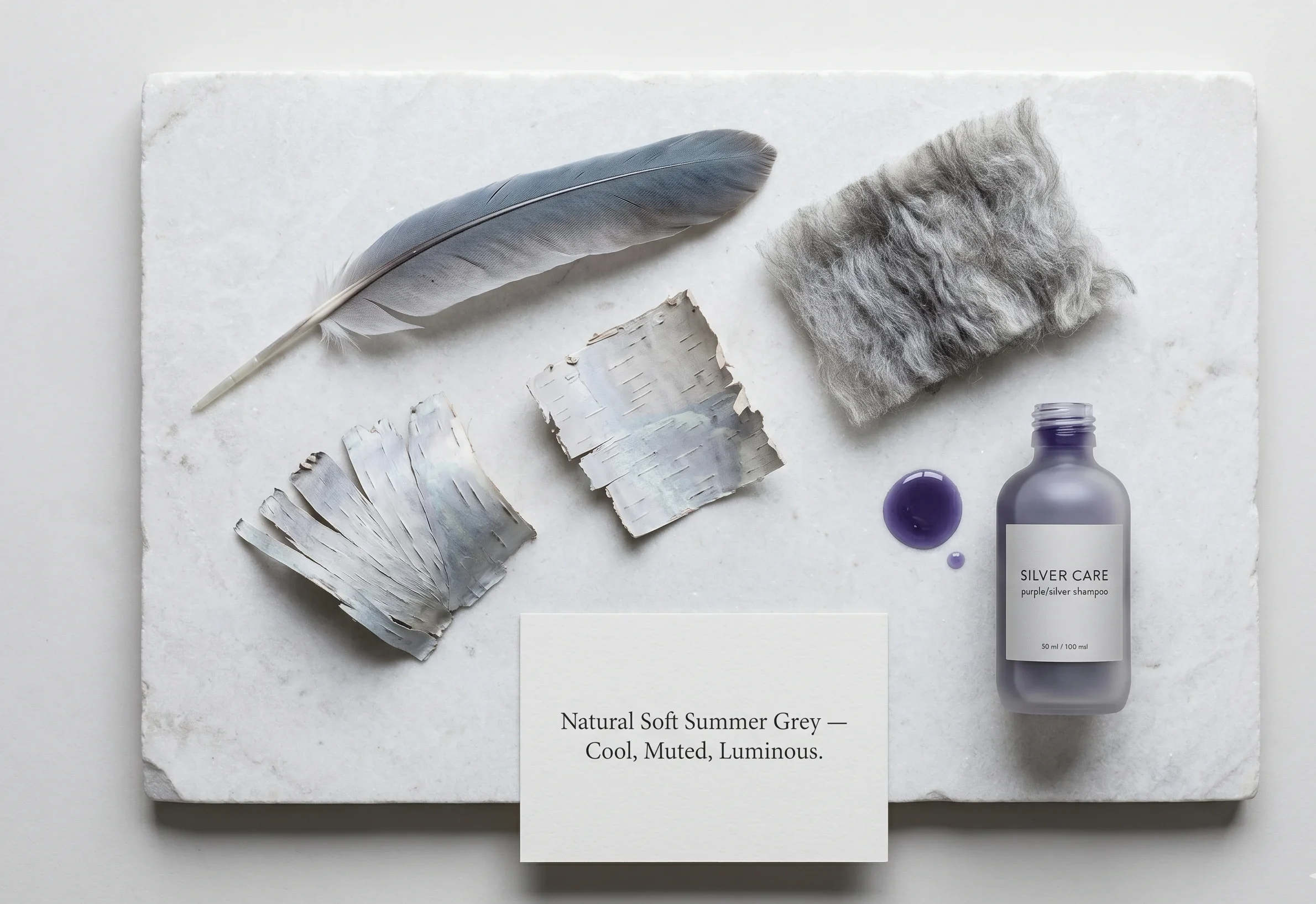
The key for Soft Summer grey: keep the grey cool. Natural grey hair can develop a yellow-warm quality from environmental exposure (sun, hard water, certain products). A weekly use of a cool-toned purple or silver shampoo maintains the cool quality that makes grey hair sing on Soft Summer colouring — while preventing the brassiness that would shift it into warm territory.
The Nature Analogy for Soft Summer Grey
A heron’s plumage — that specific cool blue-grey with a slightly dusty, sophisticated quality. Or the bark of a silver birch in winter: pale, cool-toned, neither warm nor stark. Natural Soft Summer grey hair reads the same way — luminous and cool without being harsh. It is the season’s most effortless expression.
What to Say at the Salon
The most common reason Soft Summer clients leave the salon with the wrong result: they describe the look they want, not the technical specifications the colourist needs. Saying “I want a mushroom brown” without technical context means different things to different colourists. Here is the language that consistently produces the right result.
For All-Over Colour
Salon Language — All-Over Colour
“I’m a Soft Summer in colour analysis, which means I need cool-toned, muted hair colour with absolutely no warmth — no golden, no red, no orange base. I’m looking for [shade name] at approximately level [X]. Please use an ash-based or neutral-cool formula. If the brand has an .1 (blue-ash) or .2 (violet-iridescent) tone modifier, that direction is correct for me. Please avoid anything with a .4 (copper), .3 (gold), or warm base.”
For Highlights or Balayage
Salon Language — Highlights / Balayage
“I need low-contrast, cool-toned dimension — no more than 1 to 2 levels lighter than my base. Please use ash champagne, mushroom blonde, or greige tones only. No golden, honey, or warm tones anywhere. I want very fine, blended placement — babylights or soft balayage, not chunky highlights. The goal is depth and softness, not visible contrast.”
For Grey or Brassiness Correction
Salon Language — Toning
“I need a cool-toned toning gloss to neutralise any warm or yellow tones. An ash-based or violet-based toner is correct. I want the finished colour to read as muted and cool — not bright, not golden, not high-shine warm. If using a toner shade, anything in the .1 (ash-blue) or .2 (violet) family is the right direction.”
Maintaining Cool Tone at Home
Even the perfect cool Soft Summer hair colour will drift toward warmth over time. Heat, sun exposure, chlorine, and regular washing all gradually oxidise cool pigments, introducing brassiness. Maintenance is what keeps the colour performing the way it did when it left the salon.
Purple or silver shampoo (1–2x per week):
The single most important maintenance product for Soft Summer hair colour. Purple pigment neutralises yellow-warm tones. Leave on for 3–5 minutes before rinsing. For mushroom brown and brunette shades, a blue-tinted shampoo targets orange-warmth more effectively than purple.
Sulfate-free shampoo for all other washes:
Sulfate strips colour faster than anything else. Use sulfate-free for all regular washes; reserve the purple/blue shampoo for toning sessions only.
Wash frequency:
2–3 times per week maximum. Daily washing fades colour at approximately twice the rate. Dry shampoo between washes maintains volume without stripping pigment.
Cool water rinse:
Hot water opens the hair cuticle and allows colour molecules to escape. End every wash with a 10-second cool or cold water rinse — this seals the cuticle and extends colour life meaningfully.
UV protection spray:
Sun exposure is the primary cause of colour warming in Soft Summer hair. A UV-filtering leave-in spray or protective oil applied before sun exposure prevents the golden shift that turns ash blonde toward honey.
Colour-depositing mask (weekly):
A cool-toned depositing mask — silver, ash, or cool violet — refreshes the colour tone without salon visits. Apply once per week as a 10-minute treatment over damp hair.
Touch-up schedule:
All-over colour: every 6–8 weeks. Balayage or babylights: every 10–14 weeks. Toning gloss: every 4–6 weeks for blondes; every 6–8 weeks for brunettes.
Signs your Soft Summer hair colour has drifted warm:
The hair looks slightly brassy or golden in photos. Your skin appears yellower beside the hair than it used to. Warm-toned clothing that never worked suddenly seems like it might. These are all signs the colour has oxidised and needs toning — not a full re-colour, just a cool gloss application or a few weeks of purple shampoo.
Did you take our quiz to know if you are a soft summer or not?
Soft Summer Hair Color — Frequently Asked Questions
What is the best hair color for Soft Summer?
Mushroom brown (level 6–7) is the single most universally flattering soft summer hair color — it mirrors the season’s naturally ashy, cool, slightly greyed pigmentation. For lighter preferences, mushroom blonde and dusty ash blonde follow closely. All correct Soft Summer hair colors share two qualities: cool thermal undertone (no golden warmth) and muted saturation (no high-shine vivid tone). The shade should always be described with words like “ash,” “mushroom,” “greige,” “dusty,” or “cool.”
Can Soft Summer go blonde?
Yes — with specific parameters. Soft Summer blonde must be muted, cool, and slightly greyed: mushroom blonde, dusty ash blonde, or ash champagne. Maximum depth: level 9. Avoid golden blonde, honey, platinum, and butter blonde. Platinum in particular exceeds both the contrast ceiling and the chroma tolerance of Soft Summer colouring. The Soft Summer blonde zone sits between a clear cool ash and a greige — blonde without brightness or warmth.
What hair colors should Soft Summer avoid?
Avoid all warm tones (golden blonde, honey, caramel, copper, auburn, warm chestnut) and all high-contrast extremes (jet black, platinum). The avoidance rule: if a shade is described as “warm,” “golden,” “rich,” “vibrant,” or “bright,” it is outside the Soft Summer range. Even muted warm tones create a thermal conflict that registers as sallow or discordant skin when placed beside a cool-toned face.
What highlights suit Soft Summer?
Babylights (very fine, delicate, scattered highlights) in ash champagne or mushroom blonde are the most Soft Summer-compatible highlight technique. They create subtle dimension without high-contrast visual effect. Traditional balayage works if the tones remain strictly cool and the contrast is kept to 1–2 levels. Avoid golden, honey, copper, or caramel highlights in any technique.
Is grey hair good for Soft Summer?
Yes — grey hair is among the most naturally flattering directions for Soft Summer. Grey is technically a Soft Summer colour: cool, muted, and medium in depth. Natural grey integrates seamlessly and often improves the overall palette harmony rather than disrupting it. The maintenance requirement is minimal: a weekly purple or cool toning shampoo to prevent the yellow quality that can develop from sun and environmental exposure.
Can Soft Summer have red hair?
Only in the cool, muted, dusty-rose family. Rose brown, soft mauve, and muted plum are Soft Summer-appropriate cool reds. Copper, auburn, ginger, bright red, and warm strawberry blonde are outside the palette entirely. The Soft Summer version of red hair does not read as red at a glance — it reads as an unusual, slightly rosy cool brown that people find hard to name precisely. If it looks obviously red or warm — it has crossed into Soft Autumn territory.
Soft Summer brunette — what are the best shades?
Best Soft Summer brunette shades: mushroom brown (level 6–7, the signature), cool taupe brown (level 6–7, greige quality), soft ash brown (level 5–6, deeper and clearly ashy), and rose brown (level 6–7, with subtle cool-rose undertone). All of these avoid red, warmth, or golden pigment. The defining characteristic of Soft Summer brunette is the same in every case: it reads as cool and slightly ashy, never warm or rich.
Your Hair Color Action Plan
Three Steps to Your Correct Soft Summer Hair Color
- Reading about the right hair color and living with it are two stages. Here is the practical sequence:
- Evaluate your current colour in natural daylight — not artificial light. Pull a strand near your face in outdoor or north-facing window light. Does it read as cool-grey, ashy, and muted? Or does it pull golden, warm, or bright? Warmth in the hair is almost always more visible in daylight than it appears under indoor lighting.
- If you need to transition: begin with toning before re-colouring. A single salon toning session with an ash or violet-based gloss can shift the colour 60–70% toward the correct Soft Summer zone without the commitment of a full colour application. This is particularly useful for transitioning from golden blonde toward mushroom blonde or from warm brown toward cool taupe.
- Book with a stylist using the exact salon language above — print or show it on your phone. Colour analysis language is not always part of standard training. The technical specifications (level, tone family, tone modifier number) communicate more precisely than seasonal names alone. Specify: cool, ash, muted, no warmth — and confirm the toner or shade number before it goes on.
- For a complete Soft Summer colour reference — including shade names by major brands, toner formulas, and maintenance schedules — download the Soft Summer Hair Color Guide PDF.Also don’t miss our Soft summer wardrobe guide& soft summer makeup palette guide .