Cornflower Blue —The Clearest Blue in the True Summer Palette
Cornflower Blue —The Clearest Blue in the True Summer Palette
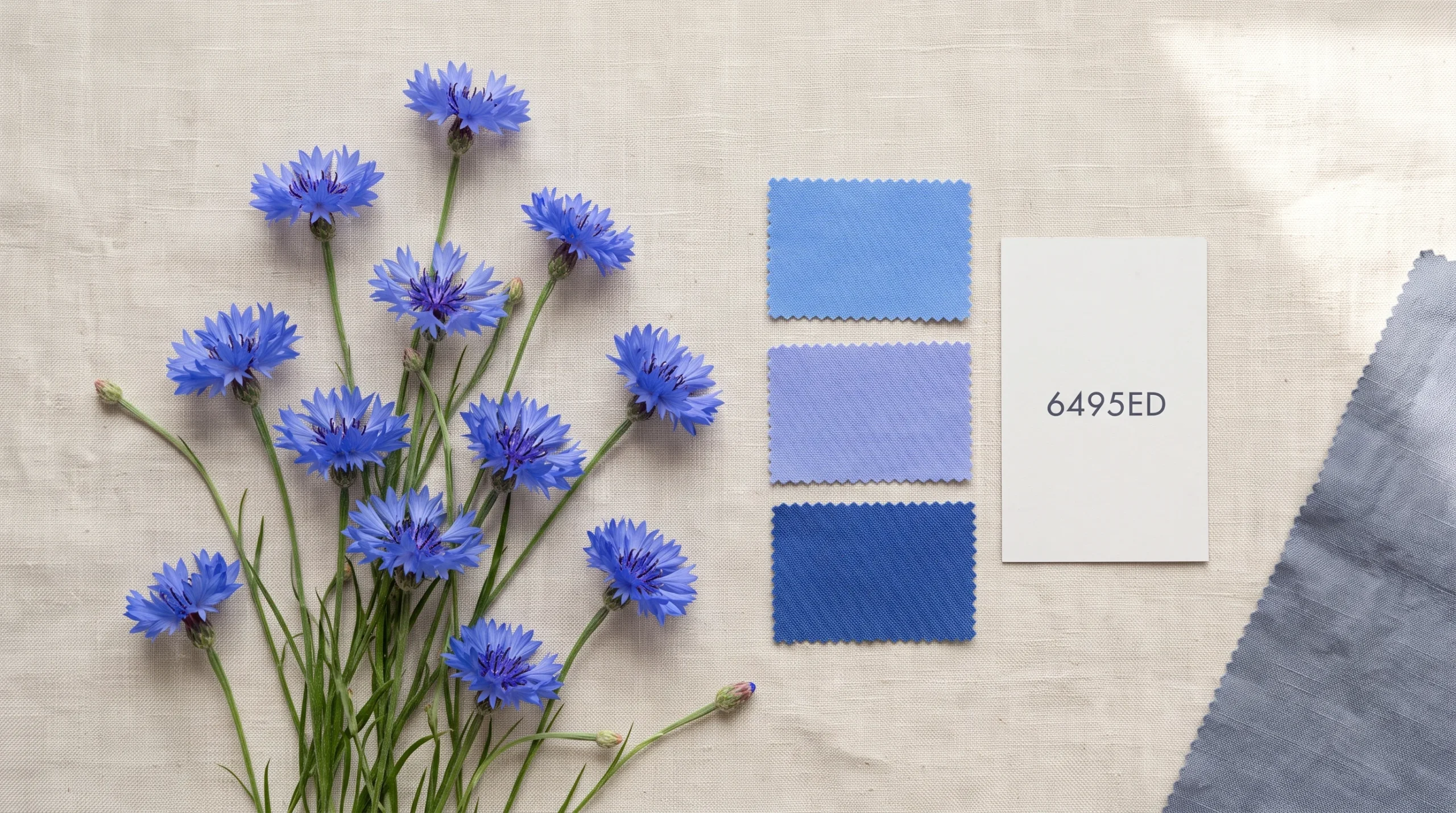
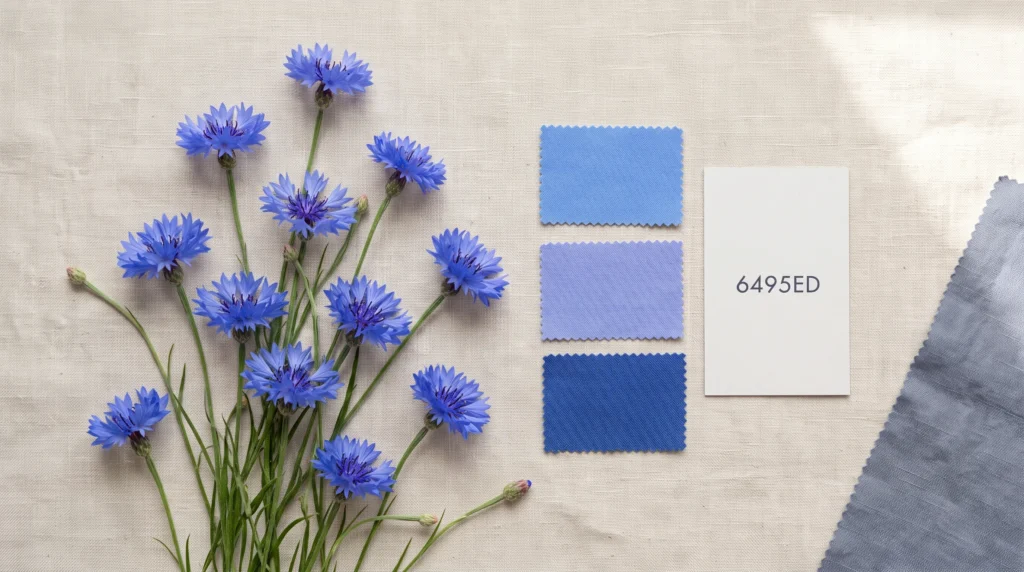
Cornflower blue (#6495ED) is a True Summer colour — cool, medium in value, and clear enough that it resists Soft Summer’s heavy muting. Its Munsell reading sits close to 5.5PB at value 6, chroma 11: more saturated than Soft Summer allows, less icy than Winter needs. That combination places it in True (Cool) Summer’s core blue family.
The Colour Theory Profile For Cornflower Blue
In my drapting sessions, cornflower blue rarely needs a second look. Hold it beside a Soft Summer client’s skin and the colour argues with the muting almost instantly — it wants to be seen, not folded into the background.
Hue, Value, and Chroma
Munsell places the hue near 5.5PB, a purple-blue family sitting just cool of true blue. Its value reads at roughly 6 on the 0–10 scale — medium, neither pale nor deep. The chroma is what actually decides the season.
At approximately 11, cornflower blue carries more saturation than almost anything in Soft Summer’s low-chroma palette, yet its value keeps it well short of Winter’s icy extremes. Cornflower blue doesn’t soften the way Soft Summer’s neighbours do; it simply stays clear, the way a held note stays in tune.See the true summer color palette.
“This one reads clear the moment you isolate it — no grey creeping in at the edges, which is exactly what keeps it out of Soft Summer’s family.”
That profile — cool hue family, medium value, moderate-high chroma — is the exact combination Sci/ART practitioners use to define True Summer, sometimes labelled Cool Summer on client-facing material. I rule out Light Summer because its blues sit paler and higher in value. I rule out Winter because true Winter blues push either colder-violet or higher in chroma than this hue ever reaches.
Cornflower Blue in the True Summer Family
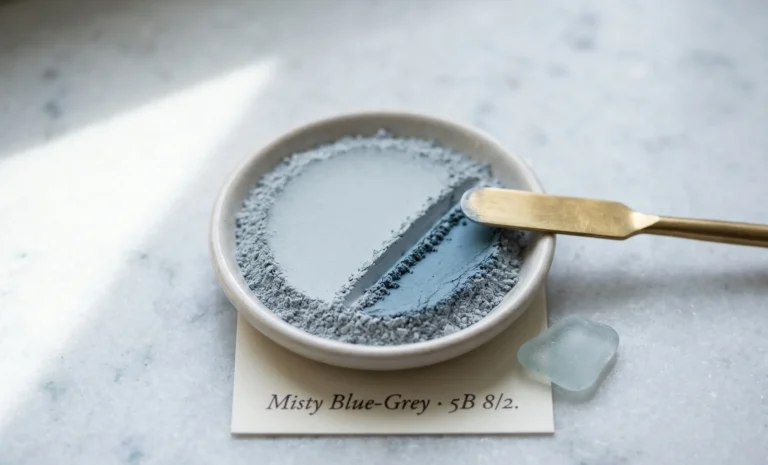
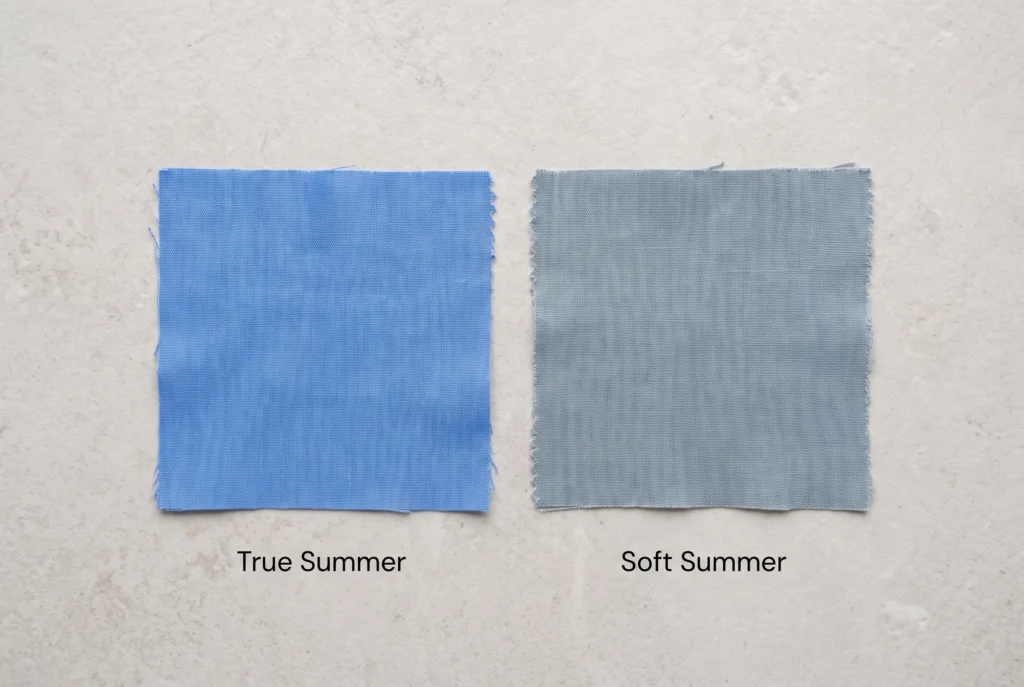
Whereas Steel Mist lives in soft summer palette, the fog-toned, heavily grey-cast blue that anchors that palette’s neutrals. Cornflower blue is what happens when you take roughly the same medium value and let the chroma back up. Same neighbourhood, clearer window. Steel Mist keeps its opinions to itself; cornflower blue says them out loud.
Cornflower Blue
TRUE SUMMERMedium value, moderate-high chroma. Clear and defined — reads as a “true” blue at a glance.
Steel Mist
SOFT SUMMERSimilar medium value, chroma pulled right back. Reads as a neutral before it reads as blue.
Set against the wider True Summer palette, cornflower blue isn’t an outlier — it’s one point on a fairly consistent blue family.
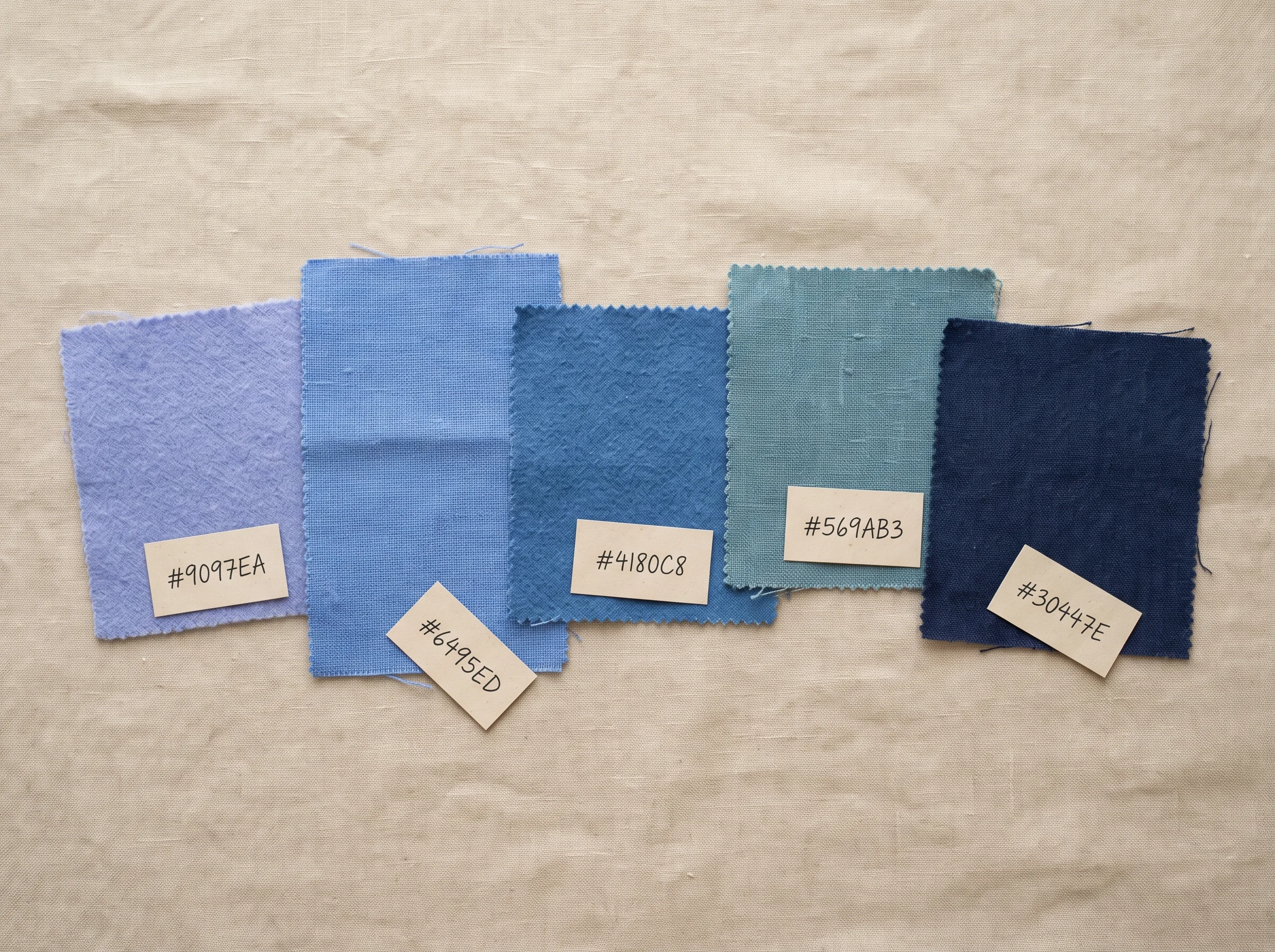
The True Summer Blue Family
Periwinkle Cast
Cornflower Blue
Cool Denim
Smoky Teal
Dusk Navy
Each shares the same medium value and the same refusal to grey down completely — the family trait that separates True Summer’s blues from Soft Summer’s. For the full palette across every colour group, not just blues, see the complete True Summer colour palette.
A Wardrobe Anchor, Not a Statement Colour
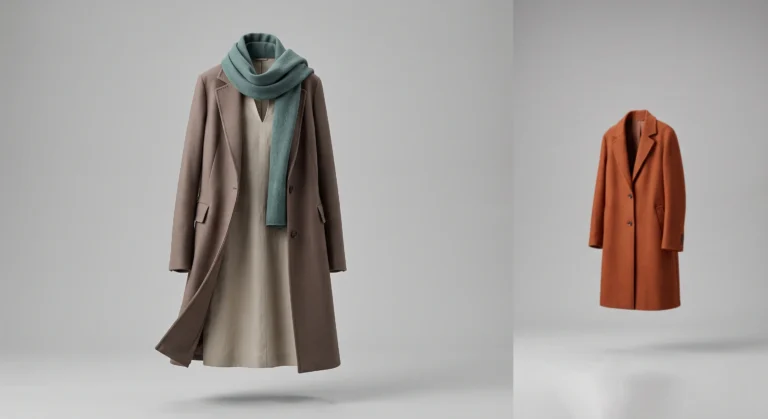
Cornflower blue doesn’t ask to be the exception in a wardrobe — it asks to be the rule. For a True Summer built on low-to-medium natural contrast, it functions less like an accent and more like an alternative neutral: a background note with enough clarity to read as considered rather than safe.
Where black flattens True Summer’s softness and optic white overpowers it, cornflower blue does the same grounding job without fighting the cool, muted quality already present in the skin, hair, and eyes around it. It recedes just enough to let the wearer stay the focal point — present and quiet, the way the mist-covered lake read at first light, never competing with what’s in front of it.See the full true summer wardrobe.
Cornflower Blue Across Skin Tones
True Summer isn’t a depth category — it’s an undertone-and-contrast category, which means it shows up across a full range of depths, from the fairest cool-toned clients I see to clients with deep, rich melanin and the same cool, muted undertone. Depth changes how a colour reads; it doesn’t change which season owns it.
On lighter cool-toned skin, cornflower blue sits close to the wearer’s own natural contrast — it reads clearly without having to work hard, because the whole palette around it is already fairly close in value.
On deeper cool-toned skin, the same hue often performs even better: the value contrast between a deep complexion and a medium-value clear blue creates real definition near the face, without the harshness pure white or true black can bring to a muted colouring.
The chroma is high enough to hold its own against richer melanin instead of disappearing into it — exactly where a heavily grey-cast colour can start to look flat by comparison. Cornflower blue doesn’t need permission from any one skin tone; it just needs a cool undertone to agree with.See the true summer makeup .
Why Cornflower Blue Belongs to True Summer
Put the three readings together and cornflower blue stops being a colour anyone has to argue for. The Munsell numbers place it outside Soft Summer’s low-chroma range and short of Winter’s extremes. The stones and the mist show the same clarity occurring naturally, at the same medium depth, without warmth.
And in a True Summer wardrobe, regardless of the wearer’s depth of colouring, it does a neutral’s job while still reading as considered. Three independent readings landing on the same season is usually the point in a drapting session where the client stops asking questions and just reaches for the fabric.See the true summer hair color guide.
Where Cornflower Blue Lives in Nature
Picture a stretch of stones along a northern coastline, photographed after rain, just before evening. Most of them read as slate or driftwood grey. But down at the tideline, where the water hasn’t quite let go, a handful hold one clear, cool note of blue — not electric, not muddy. That’s the read cornflower blue is built from: clarity without warmth, held at a medium depth. Cornflower blue doesn’t fade at dusk — it just steps back and lets the grey stones borrow its colour for a minute.
Or take a lake at first light, before the sun has burned through. The mist sits thick, and for the ten minutes before ordinary daylight blue arrives, the water underneath reads almost exactly this hue. Wet river pebbles under clear shade do the same thing at a smaller scale — a colour that exists in transition, which may be why it photographs better than it describes.
The Flower, the Sapphire, and the Name
The flower it’s named for, Centaurea cyanus, grows wild through European wheat fields and carries an old nickname — bachelor’s button. The English colour name itself is relatively young, first recorded in the early 1900s, though the flower had already carried real cultural weight across Europe for a century before that.
In the gem trade, the same hue is a formal grading term rather than a casual description. The finest sapphires ever recorded — mined from the Zanskar range in Kashmir starting in the 1880s — are still called cornflower blue on laboratory certificates today, prized for exactly the medium-tone clarity this analysis keeps landing on. Vermeer favoured the same territory of blue, reportedly grinding his own from lapis lazuli rather than trusting a mixed pigment.
Frequently Asked Questions
What season is cornflower blue?
Cornflower blue is a True Summer (Cool Summer) colour. Its medium value and moderate-high chroma give it more clarity than Soft Summer’s muted palette allows, while its cool hue keeps it out of Winter’s icier range — placing it firmly in True Summer’s core blue family.
Is cornflower blue a shade of blue?
Yes. Cornflower blue is a medium, cool-toned blue named after the wildflower Centaurea cyanus. Its standard web hex is #6495ED — a clear, moderately saturated blue rather than a pale sky blue or a deep navy.
Why is it called cornflower blue?
It’s named for the cornflower (Centaurea cyanus), a wildflower whose petals show this exact clear, cool blue. The English colour name dates to the early twentieth century, and the flower carries its own symbolic history in France and Germany.
What is the hex code for cornflower blue?
The standard web and design hex is #6495ED (RGB 100, 149, 237). Crayola’s crayon version, introduced in 1958, uses a softer #93CCEA — worth knowing if a swatch you’re comparing looks noticeably paler.
What is another name for cornflower blue?
The flower itself is sometimes called bachelor’s button. In the gem trade, jewellers use cornflower blue as a formal grading term for the finest blue sapphires, particularly historic Kashmir stones.
Is cornflower blue the same as sky blue?
No. Sky blue trends paler and more cyan-leaning. Cornflower blue sits deeper in value with a touch more violet in its undertone, giving it more saturation and a slightly cooler, clearer character.
Does cornflower blue suit deeper skin tones?
Yes, provided the undertone is cool. Depth of skin doesn’t determine season — undertone and contrast do. On deeper cool-toned complexions, cornflower blue’s clarity creates definition without the harshness of pure white or black.
Next Steps
- Pull one cornflower blue swatch against a Steel Mist swatch and compare the chroma by eye, not just by name.
- If you test as True Summer, start with cornflower blue somewhere low-commitment — a scarf or a shirt — before building around it.
- Skip it if your own undertone runs warm; this hue fights golden and olive bases at any depth.
- Confirm the read in natural daylight against your own skin, hair, and eyes — a hex code is a starting point, not a verdict.