Soft Summer Skin Tone: Undertone, Olive & Beige Tests
Soft Summer Skin Tone —
The Complete Undertone & Color Analysis Guide
Direct Answer — What Soft Summer Skin Looks LikeSoft summer skin sits in the cool-neutral zone — not fully cool like True Summer, not warm like Soft Autumn. The complexion often reads rose-beige, ash-beige, or soft neutral-olive, sometimes with visible flushing at the cheeks. Contrast between skin, hair, and eyes stays low to medium, and silver generally reads better than gold. A single test rarely settles it — comparing two specific beiges side by side in daylight is the most reliable at-home check.
Defining the Cool-Neutral Undertone
Soft Summer IS a sub-season OF the Summer family IN the Sci/ART 16-season framework — and the undertone is where that identity actually lives, more than any single feature.
Seasonal colour analysis for skin tones generally starts with three measurements. Hue is temperature — where a colour sits between warm gold and cool blue. Value is depth — how light or dark. Chroma is saturation — how clear or muted a colour reads.
A Soft Summer undertone sits cool-to-neutral in hue and low in chroma. That second part matters more than most quizzes suggest: the muted, greyed quality is often what actually defines this skin, even more than strict coolness.
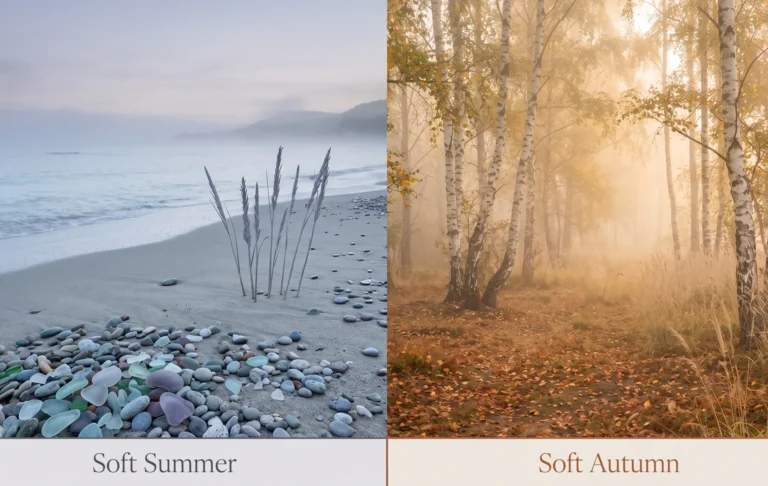
Think of sea glass left on an overcast beach — the surface never fully clears to blue or to grey, it settles somewhere quiet between the two. A cool neutral undertone works the same way: not warm, not sharply cool, just softened.
That’s why “cool neutral undertone” and “neutral undertone” are searched by so many people who never quite settle a warm-or-cool quiz. The neutral reading isn’t a failure of the test — it’s the actual biology of a genuinely muted, ashy-toned complexion, and it’s exactly the ambiguity behind every “am I warm, cool, or neutral” search that hands back a wishy-washy result.
In My Studio
Every few sessions, someone shows up having already decided they’re “probably warm, but not sure” — and what they’re describing, almost word for word, is a muted chroma skin reading pulling toward neutral, not a warm undertone at all.
Key Characteristics of a Soft Summer Complexion
Skin depth for Soft Summer runs from fair through medium to medium-tan — this season covers more depth range than most Summer sub-seasons, which is part of why it’s identified so often.
The surface colour tends toward rose-beige, ash-beige, or a soft, cool-leaning olive — never sandy, never golden. If a beige reads honey or camel instead, it’s pulling toward Autumn, not Soft Summer.
Flushing is a genuinely useful signal here. Soft summer surface redness — a pink or rosy flush at the cheeks in heat, cold, or after exercise — is common, and it confirms a cool-leaning base rather than contradicting it.
Contrast between skin, hair, and eyes stays low to medium — nothing in the face reads as a sharp, separate note. That blended, soft-toned quality is the single most consistent Soft Summer trait across every depth of skin.
Freckles, when present, tend to sit close in tone to the surrounding skin rather than standing apart from it — another low-contrast feature worth checking alongside the rest.
How to Identify Your Undertone (And Why Standard Tests Fall Short)
Most undertone quizzes rely on a single test — usually veins. It happens to be the least reliable one for this particular skin.
Why the Vein Test Struggles With Neutral Skin
Blue veins usually signal cool; green usually signals warm. Genuinely neutral skin undertones often show both, or a blue-green blend that refuses to commit — exactly the ambiguous result “neutral skin undertones veins” searches are describing. The test isn’t broken. It’s measuring a real neutral zone, and a single yes/no answer can’t capture that.
The Metal Test, With a Caveat
Hold silver and gold jewellery near the jaw in daylight. Soft Summer skin generally brightens more under silver — but because the undertone is neutral-cool rather than fully cool, a soft, brushed warm metal can sometimes read fine too. If both genuinely work, that’s diagnostic in itself: it points toward the neutral zone rather than away from a result.
The Beige Test — The One That Actually Resolves It
This is the comparison that settles more cases than any single-question quiz. Set two specific beiges side by side and hold each against the jaw in real daylight.
Beige
Beige
The grey–beige should sit quietly against Soft Summer skin — almost disappearing into it. The camel version usually looks slightly dirty or flat on the same skin, even though it reads as a perfectly pleasant colour entirely on its own.
In My Studio
This is the moment in a session where most people say “oh” — the vein test gave them nothing, but two beiges side by side answer it in about four seconds.
Put together, the three tests form a simple sequence rather than three separate guesses:
| Test | Soft Summer Result | Soft Autumn Result | If Inconclusive |
|---|---|---|---|
| Vein colour | Blue, blue–green, or ambiguous | Green or green–blue | Move to the metal test |
| Metal near jaw | Silver clearly brighter | Gold clearly brighter | Move to the beige test |
| Beige comparison | Grey–beige sits quiet; camel looks flat | Camel warms the skin; grey–beige looks dull | A professional draping session |
Soft Summer vs. Soft Autumn Skin
Soft Autumn’s warm-neutral base — sun-warmed sand rather than overcast stone — sits directly across the undertone line from Soft Summer, and the two are the most confused pairing in the entire framework.
Both are muted and low-contrast, which is exactly why they’re mistaken for each other. The difference isn’t softness. It’s temperature.
| Feature | Soft Summer | Soft Autumn |
|---|---|---|
| Undertone direction | Cool–neutral: blue, rose, ash | Warm–neutral: yellow, gold, peach |
| Best beige | Grey–beige, mushroom | Camel, sand |
| Jewellery | Silver, brushed pewter | Matte gold, antique brass |
| Eyes | Grey–blue, grey–green, cool hazel | Warm hazel, golden–brown, warm green |
| Hair | Ash blonde or brown, no gold sheen | Golden brown, warm highlights |
Worth naming separately: Soft Summer vs. True Summer undertone isn’t the same question. True Summer sits purely cool with more brightness and contrast; Soft Summer is cool-neutral and consistently muted, carrying a little of Autumn’s softness into an otherwise cool base.
For the complete side-by-side — clothing, makeup, and the full palette comparison, not just skin — see Soft Summer vs. Soft Autumn.
The Soft Summer Skin Tone Colour Palette
Once the undertone is confirmed, the logic behind the colour palette stops being abstract.
A colour sits well against Soft Summer skin when it shares the same low-chroma register — muted, slightly greyed, cool or cool-neutral in direction. A colour breaks the moment it goes clear, bright, or warm enough to separate itself from the skin instead of sitting inside it.
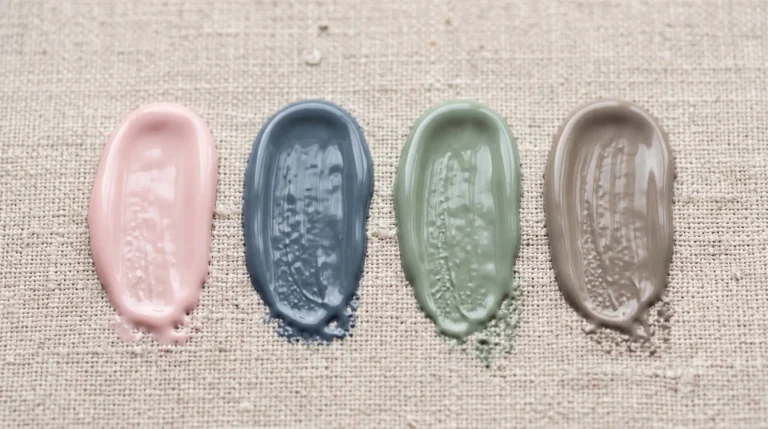
Think of a garden the morning after rain — every colour slightly damp and quiet rather than saturated: dusty rose, slate blue-grey, soft sage. None of it shouts. That restraint is exactly what makes it work against Soft Summer’s own muted quality.
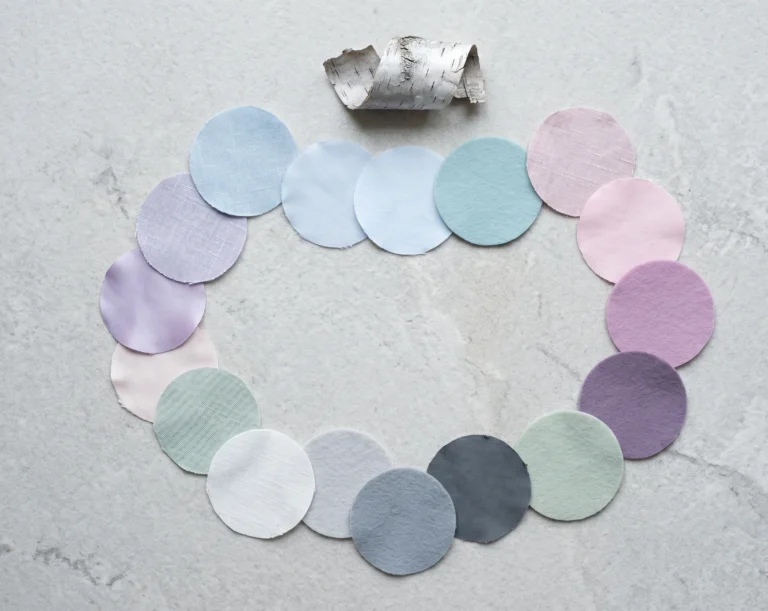
A working sample of the palette, drawn from across its families:
This is a working sample, not the full set. The complete shade index — every family, every hex code — lives on the Soft Summer Colour Palette Card.
Foundation & Makeup Matching for Soft Summer Skin
Foundation is where an incorrect undertone read becomes visible fastest — wrong by even a shade and the whole face looks slightly off, regardless of how well the rest of the makeup is chosen.
Foundation shades for Soft Summer sit in the neutral-to-cool-neutral family: rose-beige, neutral, or cool-taupe bases rather than yellow- or gold-heavy warm formulas. A foundation marketed as “neutral” is frequently the more accurate search term, since fully “cool” shades can sometimes tip pink rather than settling into the ashy quality this skin actually has.
Cool taupe reads as the most dependable contour and bronzer direction — it deepens the face without introducing the orange cast a warm bronzer creates against cool-neutral skin.
Why Black Washes Out Soft Summer
Black sits at the extreme end of both value and chroma — maximum contrast, zero softness. Against a complexion built on low contrast and muted colour, black doesn’t frame the face so much as compete with it, pulling attention to the fabric or liner rather than the skin. Soft charcoal or dark grey-brown do the same job with none of the fight.
Lip and blush colour follow the same undertone logic in more detail than fits here — see the full Soft Summer Makeup Guide for shade-by-shade recommendations. Hair colour works the same way — ash-based tones hold the undertone, gold or copper tones fight it — with the complete breakdown in the Soft Summer Hair Color guide.
Soft Summer Skin Across Depths — Fair to Deep
Soft Summer occurs at every skin depth, from fair through deep. What changes across that range is contrast and how far a colour’s value has to travel to sit correctly — not the undertone itself.
At a lighter value, the same cool-neutral base reads as instantly gentle — a pale rose-beige sits close in value to light Soft Summer skin, so a palette colour barely has to reach at all.
At a deeper value, the undertone direction stays exactly the same, but a colour with too little contrast can flatten the face rather than complementing it. Deeper Soft Summer skin generally holds slightly more of the palette’s value range well, without ever needing to reach for anything warm or saturated to compensate.
Is Olive Skin Cool or Warm?
Olive skin can be either. A cool or neutral-cool olive — with a grey-green cast rather than a golden one — is a real, if less commonly discussed, Soft Summer presentation. A golden or yellow-based olive belongs to a warm season instead. The green in the skin isn’t what decides it; the direction that green leans is.
In My Studio
Watching this happen under a drape, in real time, is different from reading about it — a cool olive complexion under a warm colour looks tired in a way that’s hard to describe until you’ve seen the same face brighten the moment a cool-neutral fabric replaces it.
Cool olive Soft Summer skin is genuinely one of the most misread presentations in this framework, because most undertone guides assume olive automatically means warm. It doesn’t. If skin reads green rather than gold, and the rest of this page’s low-contrast, muted description matches, cool-neutral olive is worth taking seriously as an actual base — even though most colour-analysis content defaults straight to Autumn.
Soft Summer Skin Tone — FAQs
What does a Soft Summer skin undertone look like?
Soft summer skin reads cool-neutral — often rose-beige, ash-beige, or soft cool-leaning olive, with low to medium contrast against the hair and eyes. Flushing at the cheeks is common. It sits between True Summer’s purer coolness and Soft Autumn’s warmth, borrowing Autumn’s muted quality without its temperature.
Is olive skin cool or warm in Soft Summer?
Olive skin can be either. A grey-green, cool-leaning olive fits Soft Summer’s cool-neutral undertone. A golden or yellow-leaning olive points toward a warm season instead. The direction the green leans — grey or gold — is what actually decides it, not the presence of olive itself.
Why doesn’t the vein test work for Soft Summer skin?
Because the undertone genuinely sits in the neutral zone. Veins often read blue-green or ambiguous rather than clearly blue or green, since a true neutral-cool undertone doesn’t commit fully to either signal. That ambiguous result is diagnostic, not a failed test.
Why does black wash out Soft Summer skin?
Black sits at maximum contrast and zero softness, which fights a complexion built on low contrast and muted colour. It pulls focus to the fabric instead of the face. Soft charcoal or dark grey-brown provide the same depth without the same fight.
What’s the difference between Soft Summer and Soft Autumn skin?
Undertone direction. Soft Summer is cool-neutral — blue, rose, and ash-based. Soft Autumn is warm-neutral — yellow, gold, and peach-based. Both are muted and low-contrast, which is why they’re confused, but the beige and metal tests usually settle it in seconds.
What foundation shade works best for Soft Summer skin?
Neutral to cool-neutral bases — rose-beige, taupe, or neutral formulas rather than yellow- or gold-heavy warm shades. “Neutral” is often a more accurate search term than “cool,” since fully cool-pink formulas can occasionally overshoot the actual ashy quality of this undertone.
Does Soft Summer skin tone change with tanning or age?
The underlying undertone stays stable — tanning and age change depth and surface warmth, not the cool-neutral direction underneath. A tan can temporarily make warm colours look less wrong, but skin settles back toward its cool-neutral base once the tan fades.
Where This Leaves you
Confirming Your Undertone, Properly
A page can point you in the right direction. Only a side-by-side comparison in real daylight actually confirms it.
Run the beige test above before anything else — it resolves more cases on its own than any quiz does.
If Soft Summer is confirmed, the full palette lives on the Soft Summer Colour Palette Card — swatches, hex codes, and every named shade.
Still between two seasons? Soft Summer vs. Soft Autumn covers the complete comparison, not just skin.
The beige test is the one I’d do first, out of everything on this page — it settles more cases than people expect, and it takes about as long as reading this sentence did.